
11 Kitchen Cleaning Ideas That Make Cleanup Faster (Tested and Honest)

As an Amazon Associate, I earn from qualifying purchases, at no extra cost to you.
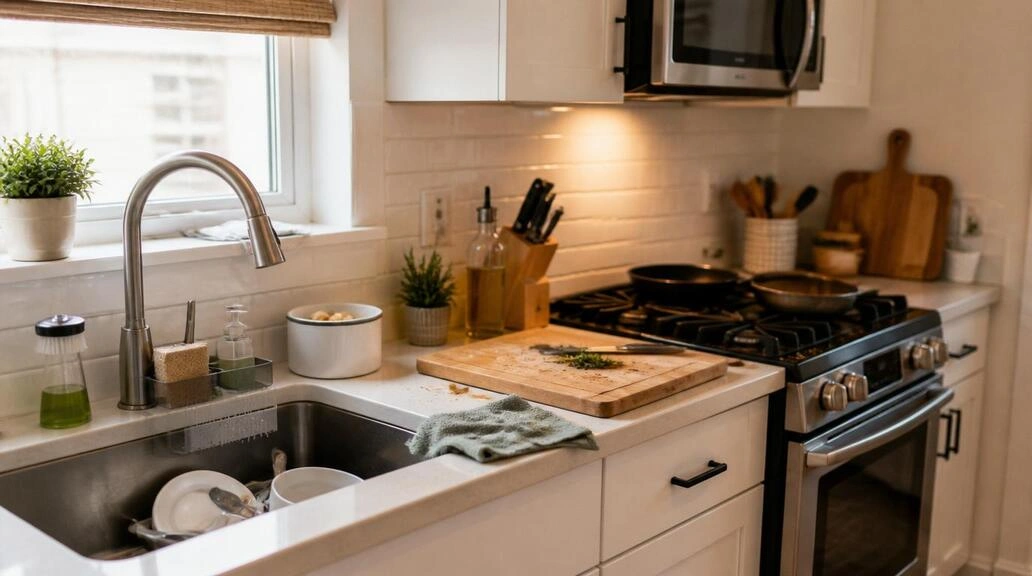
There’s a specific kind of annoyance that hits after cooking a good meal when you turn around and realize the real work is just starting: the sink is full, the stove is splattered, and the counter is sticky. That is usually the moment you start wishing for a few kitchen cleaning ideas that would actually make cleanup faster.
For a long time, my version of “cleaning faster” was leaving small messes for later and hoping I’d be more motivated after dinner; I usually wasn’t. What finally helped was making cleanup easier to start: a few small habits and a few tools that actually solved problems in my kitchen instead of adding clutter.
This list is not about deep cleaning or gimmicky gadgets. These are the ideas that genuinely made everyday cleanup faster and less annoying in my own kitchen.
Before You Buy
When the kitchen feels hard to keep clean, it is tempting to buy more products: a new spray, a clever scrubber, the tool that looks satisfying in a video.
That can help, but it is also how you end up with a crowded sink area and a cabinet full of bottles you never finish.
Before adding anything new, it helps to be honest about what actually makes a cleaning tool useful. In a small kitchen, the best tools are usually the ones that:
- Get used several times a week, not once a month
- Are easy to grab quickly
- Rinse clean without much effort
- Are small enough to store near where you use them
If it checks most of those, it is probably worth trying.
If it only solves one very narrow problem, it usually ends up at the back of a drawer.
How I Chose These Ideas
This list focuses on things that cut real cleanup time in a normal home kitchen.
Every idea is either a habit that prevents mess during cooking or a simple tool that makes the cleanup you already do go faster.
Top 5 Quick Wins
If you want to start small, these made the biggest difference with the least effort.
| Idea | Best for | Main benefit | Helpful tool |
|---|---|---|---|
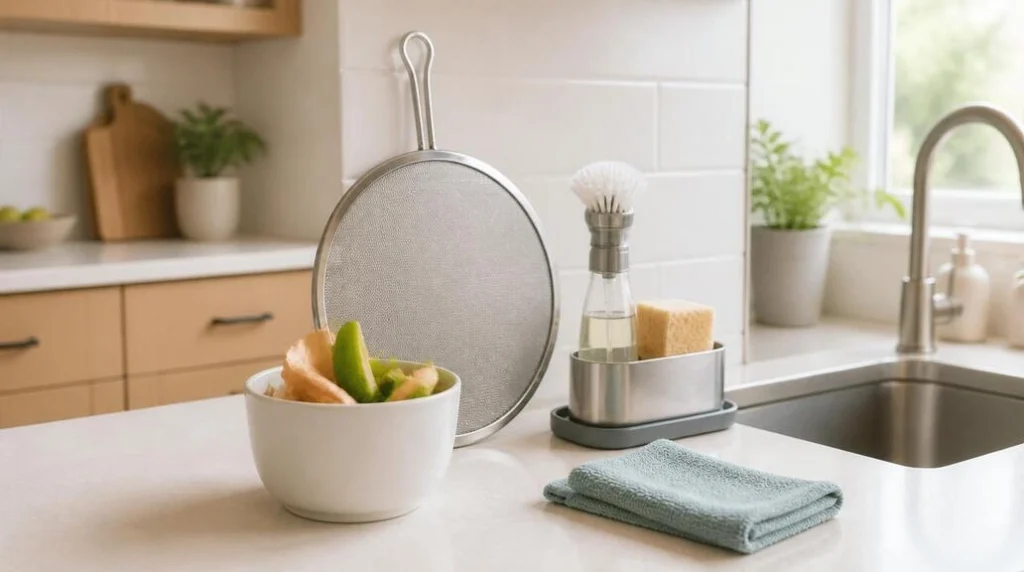
| Countertop trash bowl | Prep scraps and peels | Keeps mess off the counter | Small bowl or compost bin |
| Splatter screen | Frying and sautéing | Prevents stovetop splatter | Pan-sized splatter screen |
| Dish soap dispensing brush | Daily dish cleanup | Faster sink reset | Soap-filled dish brush |
| Sink caddy | Sink-side clutter | Keeps tools contained and draining | Compact caddy that drains well |
| Microfiber cloth at the sink | Daily wipe-downs | Quick, streak-free cleaning | Set of washable cloths |
The Full List: 11 Kitchen Cleaning Ideas That Make Cleanup Faster
1. Keep a countertop trash bowl while you cook
A small bowl next to the cutting board for peels and packaging keeps scraps in one spot instead of scattered around the counter.
I noticed prep feels smoother when I use it, because I empty one bowl at the end instead of making several quick trips to the trash.
2. Use a splatter screen when frying or sautéing
Most stovetop scrubbing starts when oil pops out of the pan and lands around the burners.
A splatter screen blocks a lot of that, so the area around the pan needs less wiping afterward.
I notice the biggest difference with foods like cutlets or sausages on medium-high heat.
It helps more if the screen actually matches the pans you use most, otherwise it tends to stay in the cabinet.
3. Wipe the stovetop while it is still warm
Grease and sauce spots wipe off quickly while the surface is warm and safe to touch.
Once they cool and dry, I usually need more cleaner and more scrubbing. Keeping a microfiber cloth near the stove makes it easier to do a quick wipe right after cooking instead of saving it for later.
4. Switch to a dish soap dispensing brush
A dish soap dispensing brush removes one step, since the soap and scrubber are already together.
For small jobs like a pan I want to reuse or a couple of breakfast dishes, it makes me more likely to rinse and clean them right away.
The ones that worked best for me were the brushes that did not leak and could handle everyday pots and pans.
5. Keep a sink caddy for soap, brush, and sponge
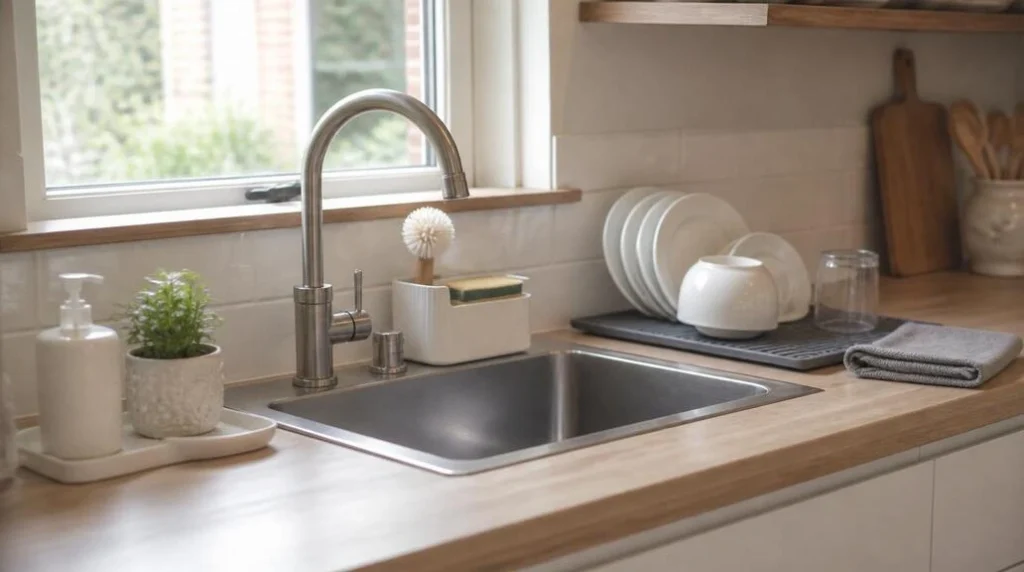
A sink caddy gives soap, brush, sponge, and cloth a set place instead of letting them sit in random puddles on the sink edge.
In my kitchen, the sink area looks neater when everything stands in one small organizer that drains well. It also makes it easier to see when something needs to be replaced or washed.
6. Store a microfiber cloth at the sink
Having a clean microfiber cloth within reach is what makes quick wipe-downs happen on normal days.
If I have to look for one, I am more likely to leave small splatters for another time.
A simple habit that helped was keeping a small stack near the sink and putting the used one straight into the wash basket.
7. Pre-soak messy tools while you cook
Dried-on food is what turns a fast cleanup into heavy scrubbing. Small dish pan for soaking
Filling a pan, mixing bowl, or utensils with warm soapy water as soon as I am done with them usually means they rinse much easier after the meal.
A small basin or dish pan in the sink makes it simpler to soak a few items without blocking the whole sink.
8. Make dish drying part of cleanup, not a separate mess
Dish drying can turn into clutter when clean items do not have a clear place to sit. Compact dish drying rack or absorbent drying mat
Using a drying mat or compact rack gives washed dishes a defined spot so they are not spread across the whole counter.
What helped me was treating that area as temporary and putting things away once they are dry, instead of letting them live there.
9. Line the bottom of the oven with a reusable liner
If you roast often or cook dishes that might bubble over, a reusable oven liner takes the hit instead of the oven floor. Reusable oven liner
In my case, that turned oven spills into a quick wipe or rinse of the liner instead of a long scrub inside the oven.
I still follow the oven manual to place it correctly, so it does not block vents or heating elements.
10. Use a small scrub brush for corners and sink edges
Sponges do not reach corners, drain edges, and the base of the faucet very well. Small scrub brush for sink edges
A small stiff-bristled brush gets into those spots faster and with less effort. Keeping it in the sink caddy where I can see it makes it part of normal cleanup, not a once-in-a-while tool.
11. End with a two-minute counter reset
A short reset at the end of cooking keeps tomorrow’s cleanup from feeling too big.
For me, that usually means putting away obvious clutter, wiping the main work surface, and making sure the sink is not holding anything that will harden overnight.
It is not a perfect clean, just two focused minutes that keep the kitchen from sliding into “too much to start with.”
Which Idea Should You Try First?
Start with the part of cleanup that annoys you most.
- If the stovetop is always the worst, start with the splatter screen and warm-wipe habit.
- If prep leaves scraps everywhere, start with a countertop trash bowl.
- If the sink area feels chaotic, start with the sink caddy and dish brush.
- If dried-on pans slow you down, start with pre-soaking while you cook.
- If clean dishes take over the counter, start with a drying mat or compact rack.
Fix that one friction point, give it two weeks, then decide if anything else needs changing.
What Didn’t Help as Much as Expected
Some things sounded helpful at first and did not end up earning a permanent spot in my kitchen.
Single-purpose gadgets were the most common example. Tools that only clean one very specific area can feel satisfying the first time, but I did not reach for them often enough to justify the space they took.
Having too many spray bottles near the sink also worked against me. The lineup of products turned into visual clutter and made it harder to remember which one to use, so moving down to one everyday spray and one degreaser felt simpler.
Very cheap sponges and scrubbers were another small lesson. They wore out quickly and did not scrub as well, so choosing a slightly better brush that lasted longer felt like a better trade-off over time.
A Simple Way to Think About Kitchen Cleanup
Most kitchen mess falls into three buckets:
- Preventable mess: splatter, crumbs, and scraps you can reduce during cooking.
- Accumulated mess: sticky counters, sink grime, and grease that build up when small daily cleanup gets delayed.
- Deep clean mess: oven interiors, behind appliances, and corners you only hit occasionally.
The ideas in this post mostly focus on the first two, because keeping those under control is what has made a quick clean feel realistic on normal days in my own kitchen.
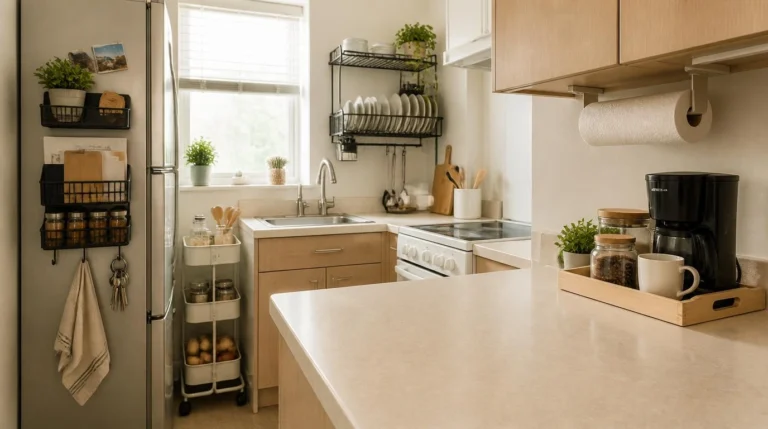
If you are working with a small kitchen and want the cleanup habits to match better storage too, I also put together a post on 11 small kitchen organizers that save counter space where I share the specific organizers that helped my own kitchen feel less crowded and easier to clean between meals.
Wrapping Up
Kitchen cleanup does not have to be the part of cooking you dread. Once I started using a few of these ideas myself, it really did feel easier to get the kitchen back to normal after dinner.
You do not need to try all 11 ideas at once. Choose the one that matches your biggest frustration right now, whether that is stovetop splatter, a cluttered sink, or floors that never seem clean, and start with that.
If you try any of these, I would love to hear how it went. Share in the comments which idea made the biggest difference in your kitchen.
And if you are also working on getting your kitchen organized, not just clean, you might like this post: Best Small Kitchen Organizers That Actually Fit.
If you found this helpful, save it to your Kitchen board on Pinterest so you can come back to it later.
Great content! Keep up the good work!